
Both Sides of the Table
A two-day live online masterclass on the IFC Performance Standards, for investors, developers and ESG professionals
- 20 - 21 November 2026 (Fri-Sat)
- Live Online
- 10:00 am - 05:00 pm IST

Why this matters right now
India is where IFC invests the most
India is IFC’s largest investment destination anywhere in the world. At the end of June 2025, its India portfolio stood at about US$10.3 billion, spread across equity and debt.* And it is set to grow: IFC has said it wants to raise its yearly investment in India from around US$5.4 billion in 2024–25 to US$10 billion by 2030, mostly in renewable energy, urban infrastructure and financial services.
All of that money comes with conditions. Every IFC investment is tested against eight Performance Standards on environmental and social risk, and the same standards sit behind the frameworks of the multilateral development banks and the Equator Principles that many commercial banks follow. If you are raising capital in India, or deciding where to put it, sooner or later you will be asked about them.
The standards also matter because Indian law doesn’t always ask for as much. Sectors like renewable energy and metro rail often need no environmental clearance at all, yet a lender will still expect you to meet the standards. Meeting them early also helps you find environmental, social and climate risks that ensure busines continuity, compliance and resilience.
*Source: IFC’s South Asia regional director, in an interview with Reuters, April 2026 (reported by Business Standard, 24 April 2026).
About the Course
One standard, two sides of the table
Most courses on the IFC Performance Standards are taught from one point of view. This one isn’t. Investors and developers look at the same project very differently, and each side understands the other better when they can see how the other one thinks.
So we teach it from both seats, and we bring in people who sit in them every day: fund ESG heads on one panel, developers who have been through DFI due diligence on the other. It is led by Dr. Prasad Modak and taught by practitioners who have worked on live transactions with both investors and borrowers.
If you sit on the investor side (funds, banks, NBFCs), you will learn to:
- Screen and categorise a deal for E&S and climate risk, quickly and consistently
- Identify where Indian law falls short of IFC PS, and what that means for the deal
- Translate diligence findings into a practical ESAP and enforceable covenants
- Track conformance through the life of the investment
If you sit on the developer side (project developers and investee companies), you will learn to:
- Know what lenders expect before diligence begins
- Close gaps against Indian law before a lender finds them
- Build an ESMS that holds up under scrutiny
- Negotiate an ESAP you can actually deliver
- Turn conformance into faster access to DFI capital
If you are an ESG professional or consultant, you learn both sides of the table, which makes you more valuable to whichever side engages you.
The Eight Performance Standards
- Assessment and management of environmental and social risks
- Labour and working conditions
- Resource efficiency and pollution prevention
- Community health, safety and security
- Land acquisition and involuntary resettlement
- Biodiversity conservation
- Indigenous peoples
- Cultural heritage
- Who Should Attend
- Investment and fund teams at PE, infrastructure and impact funds, NBFCs and banks who screen, approve and monitor deals.
- Project developers in renewable energy, infrastructure, industry and real assets who are getting ready to raise DFI or lender funding.
- ESG and sustainability professionals and consultants who work on ESIA, ESMS or ESDD and want to be confident on both sides of the table.
- Implementing agencies and PMUs running projects funded by multilateral banks.
The Programme
Day 1 - Friday 20 November
Why it matters, and the core standards
Day 2 - Saturday 21 November
Land, nature, readiness and tools
Both days run 10:00 to 17:00 IST.
What you will go through in two days
- Day 1
Day 1 is about how lenders think and about the core standards. You start with the investor’s view: how a deal is assessed, how it gets categorised, which red flags matter and how findings turn into an action plan. Then you go through PS1 (the management system that holds everything together), workers and communities (PS2 and PS4), and resource use and climate (PS3).
- Day 2
Day 2 covers land, people and nature (PS5 to PS8), then shifts to the developer’s side: how to close gaps, set up your ESMS, prepare a data room and negotiate an ESAP. You see how IFC’s standards line up with the World Bank, ADB, AIIB and Equator Principles frameworks, so you can prepare once for several lenders. The day ends with hands-on screening: you run a case through a free tool, then watch AI read through project documents live.
- By the end, you will have:
- Gone through all eight IFC PS standards, with expanded interpretation, covering today’s risks and opportunities.
- Understand differences with India’s Law and Regulations
- Heard from fund ESG heads and from developers on how due diligence actually goes and what are the expectations
- Taken away checklists and a crosswalk of IFC PS against other lenders’ frameworks
- Experience the power of AI in ESDD that follows IFS PS
What you will take home
- A free IFC PS screening tool
It helps you categorise a project, see which standards are triggered, check the exclusion list and Indian clearance requirements, and print a summary.
- A live AI-assisted screening demo
You watch how AI can we used for ESDD, and get inspired.
- Checklists and an ESF crosswalk
- Two practitioner panels
Investors and developers share what diligence looks like from each side of the table.
Your course leader and faculty
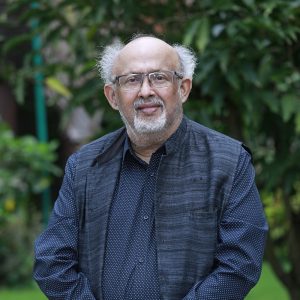
Dr. Modak has helped shape and assess environmental and social safeguards at the multilateral development banks, and led India's Country Assessment against the World Bank's Environmental and Social Standards. He has trained staff at the World Bank, ADB and AIIB, as well as implementing agencies and PMUs, and has advised bilateral agencies, PE funds, NBFCs and banks on ESMS, ESDD and ESIA.
He is a former professor at IIT Bombay and a Visiting Professor in Practice at the Grantham Research Institute in the UK. He is the author of EIA in Developing Countries, which has been translated into Chinese and Japanese, and Environmental Management Towards Sustainability, among other books.
Fee Structure
Early bird
(before the free webinar on 30 October)
₹25,000 + 18% GST / $318 inclusive of GST
Standard
(1 November to 10 November)
₹32,500 + 18% GST / $415 inclusive of GST
Late
(after 10 November)
₹40,000 + 18% GST / $510 inclusive of GST
US$ amounts are indicative, at US$1 = ₹95. Fees are subject to change.
This masterclass is neither endorsed nor supported by the International Finance Corporation